

Amanda Wright’s path to the diaconate began with an invitation. Not an invitation to ordination, at first, but to mission and outreach.
After growing up Catholic, Amanda and her family joined the Episcopal Church in 2011. At Church of the Holy Spirit in Lake Forest, Illinois, she discovered something that felt new and powerful: a community that did not simply write checks to support neighbors in need, but built relationships, gave time, and entered into ministry alongside others.
That invitation into mission and outreach became a turning point. “It helped me realize that we weren’t just donating money,” Amanda said. “We were developing relationships with people and getting to know them not just as people who needed help, but as fellow Christians.”
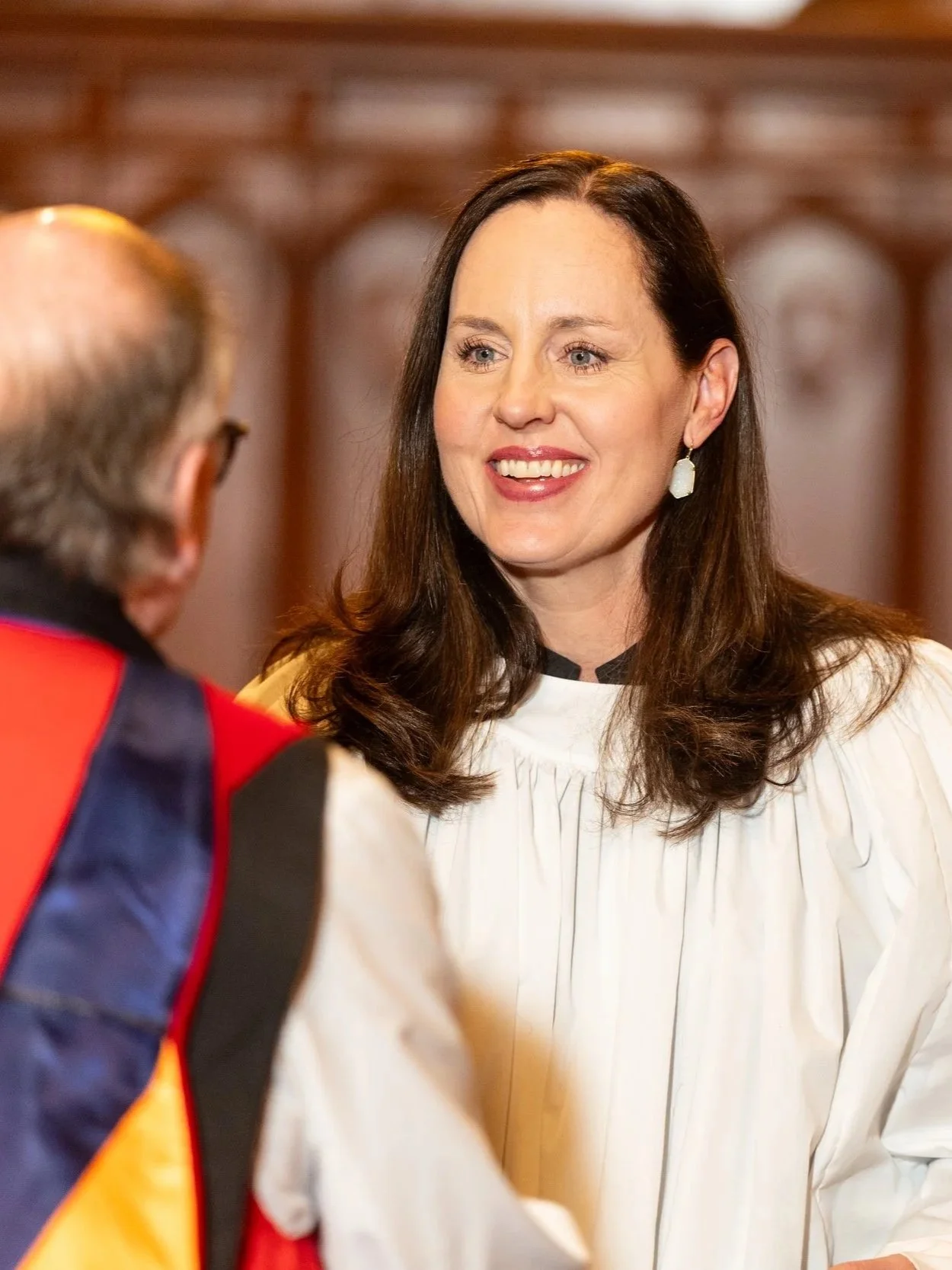
Amanda Wright, Diocese of Chicago: “I realized I can’t do everything. My role is helping others discover their gifts.”
Over time, Amanda became deeply involved in parish leadership. She now chairs Mission and Outreach, helping guide a ministry that distributes significant support to community partners each year. She also became involved in newcomers ministry and other areas of parish life. Before long, she said with a laugh, she was helping lead “six ministries at the church.”
Professionally, Amanda is a physical therapist, accustomed to working one-on-one with patients. Parish ministry opened up new leadership gifts she had not fully recognized before: organizing, facilitating, listening, and helping people find ways to serve. Eventually, others began naming what she had not yet fully claimed.
“You’re already being a deacon,” they told her.
Amanda began individual discernment in 2020, followed by a period of discernment with clergy and a parish committee. When she was accepted as a postulant for ordination in the Diocese of Chicago, she was directed into Bexley Seabury Seminary’s Deacons Formation Collaborative. The DFC’s flexible, asynchronous structure made formation possible within the realities of Amanda’s life — as a physical therapist, parent, parish leader, and active lay minister.
The program also expanded her understanding of the Episcopal Church, theology, Scripture, pastoral care, preaching, and the diaconate itself. She especially valued coursework in Holy Scripture, spirituality, pastoral care, and preaching, along with the support of mentors who helped her recognize and refine her gifts. “The mentors were the best part,” she said. “They were so supportive.”
Near the end of the program, Amanda’s mentors reflected back what they saw in her: executive functioning, organizing ability, empathy, and a strong capacity for connection. That affirmation mattered. It also helped her see that diaconal ministry is not about doing everything herself.
“I thought deacons went out and did everything and brought people with them,” she said. “I quickly realized I can’t do everything.”
Through formation and mentorship, Amanda came to understand the deacon’s role differently: not as the person who leads every ministry, but as someone who helps others discern their gifts and live into their own call to serve.
That insight is already shaping her hopes for future ministry. Amanda feels called to help lay people enter into deeper discernment about their own gifts from God — not through a quick conversation or simple volunteer sign-up, but through prayer, reflection, listening, and time. “Every Christian really deserves the gift of discernment,” she said.
The DFC also helped Amanda move from study into action. During a pathway focused on organizing and advocacy, she researched the needs of a nearby prison in Waukegan, Illinois. When her field education parish later mentioned that the prison had requested spiritual support, Amanda recognized the connection immediately. “I had already done the research,” she said. “So I thought, why would I spend all this time organizing it and then not do it?”
The prison ministry began in September. At first, Amanda arrived with a curriculum and a plan. But the ministry quickly taught her to adapt. The men who came to the first gatherings did not need an abstract program. They needed church. They wanted communion, Scripture, prayer, conversation, and a space where they could be heard. “I had to change my plan to meet their needs,” she said.
That, too, became part of her formation. In a maximum-security setting, Amanda discovered that much of ministry is not about having the perfect structure. It is about showing up, listening carefully, and creating a space where people feel seen, safe, and spiritually supported.
Whether in a prison group, a parish ministry, or a discernment conversation with a lay leader, Amanda now sees a common thread: people need to know their gifts matter.
As she prepares for ordination to the diaconate in June 2026, Amanda carries forward a vision of ministry rooted in empowerment. She hopes to help congregations share resources more generously, support one another more creatively, and invite more people into meaningful service.
For Amanda, programs like the Deacons Formation Collaborative make that future more possible by forming leaders who remain rooted in real communities while preparing for ordained ministry. Formation did not take her away from the ministries where her call first emerged. It helped her understand them more deeply — and helped her see how to invite others into the work.