To Form Is Not to Finish
By The Rev. Catherine Duffy, Bexley Seabury Seminary ‘24
Member, Bexley Seabury Seminary Board of Directors
God does not have a five-year plan.
How easy life would be if such a plan existed, if we knew where God’s path would take us, which way God wanted us to turn, and which lessons we would learn along the way. How simple things would be if we did not make mistakes, didn’t wonder, didn’t ask questions whose answers needed to be sought, learned, and discerned.
How easy it would be—yes—but perhaps a shallow kind of ease, one where we, called to be seekers of Christ in all things, sought only ourselves and the answers closest at hand.
When the Road Map Disappears
When I first began considering theological education more than twenty years ago, I was blissfully young. God was present in my life in profound ways, and the desire to share God’s word and sacraments with all people was as present and real as it is now. I was confident I would be ordained a priest in a matter of years and move on to a fulfilling ministry career.
I had entered the ordination process in the Diocese of North Carolina and planned to begin theological education a couple of years later. Instead, on my way to enrolling in a residential seminary, I encountered nearly every roadblock imaginable: diocesan timing, unexpected and serious health issues, and the resulting financial struggles. The moment when I officially withdrew from the process came when the seminary required $500 to hold my spot—funds I did not have.
Convinced that I had misheard God’s voice, I surrendered the idea of seminary and assumed I would never return to it. As one does when one is twenty-eight years old and the road map to one’s life flies out the window, I got a job—one that I loved, building on experiences I had accumulated to date.
I had the extraordinary good fortune to land at a company with healthy organizational culture and practices. I learned what open communication and clear expectations looked like across a staff of thousands. People were expected to be accountable, but they were also supported. We learned to think strategically as well as tactically, and to value people for what they brought when they were wholly themselves.
At the time, there was no reason to believe these years were preparation for ministry. Yes, I learned to recognize organizational health and illness. But I also came to understand that good leadership is not just having a program idea or making decisions. It is the act of loving people, motivating them, understanding them, listening to them, and creating the conditions in which they can do their best work.
Jesus work.
I just did not yet know where those lessons would lead.
Formation Was Already Happening
Eventually, my husband and I began to feel called toward other ways of using our time and gifts. We both enjoyed our corporate positions well enough, but we had started to wonder how and where we were meant to spend the next phase of our lives. By December 2019, we had both left our jobs in order to spend the following year traveling and discerning what God had in store for us.
I had become an invested lay leader in my parish and diocese, but the call to ordained ministry had not left me. Rather than being sure that priestly ministry was my call, I found myself open to listening again—to hearing whether it still felt right within the current context of my life. In January 2020, I attended the Diocese of Southern Ohio’s Explorer’s Day to open space to listen.
Following that, we went on exactly one trip—to Florida to visit my mother-in-law.
Shortly after, we experienced the same lockdown, changed plans, and isolation as everyone else. Unlike many people, though, we were unemployed with a great deal of time on our hands.
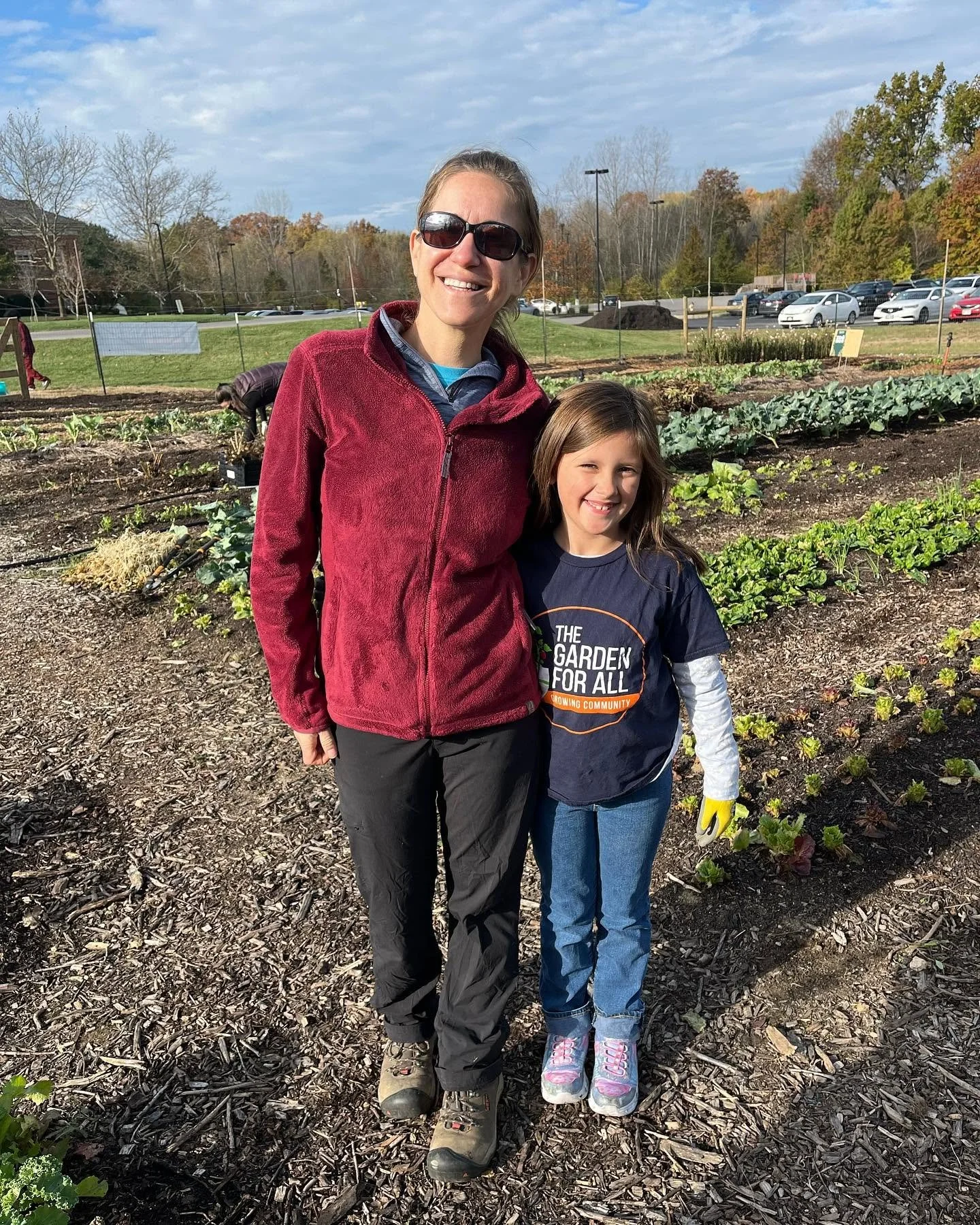
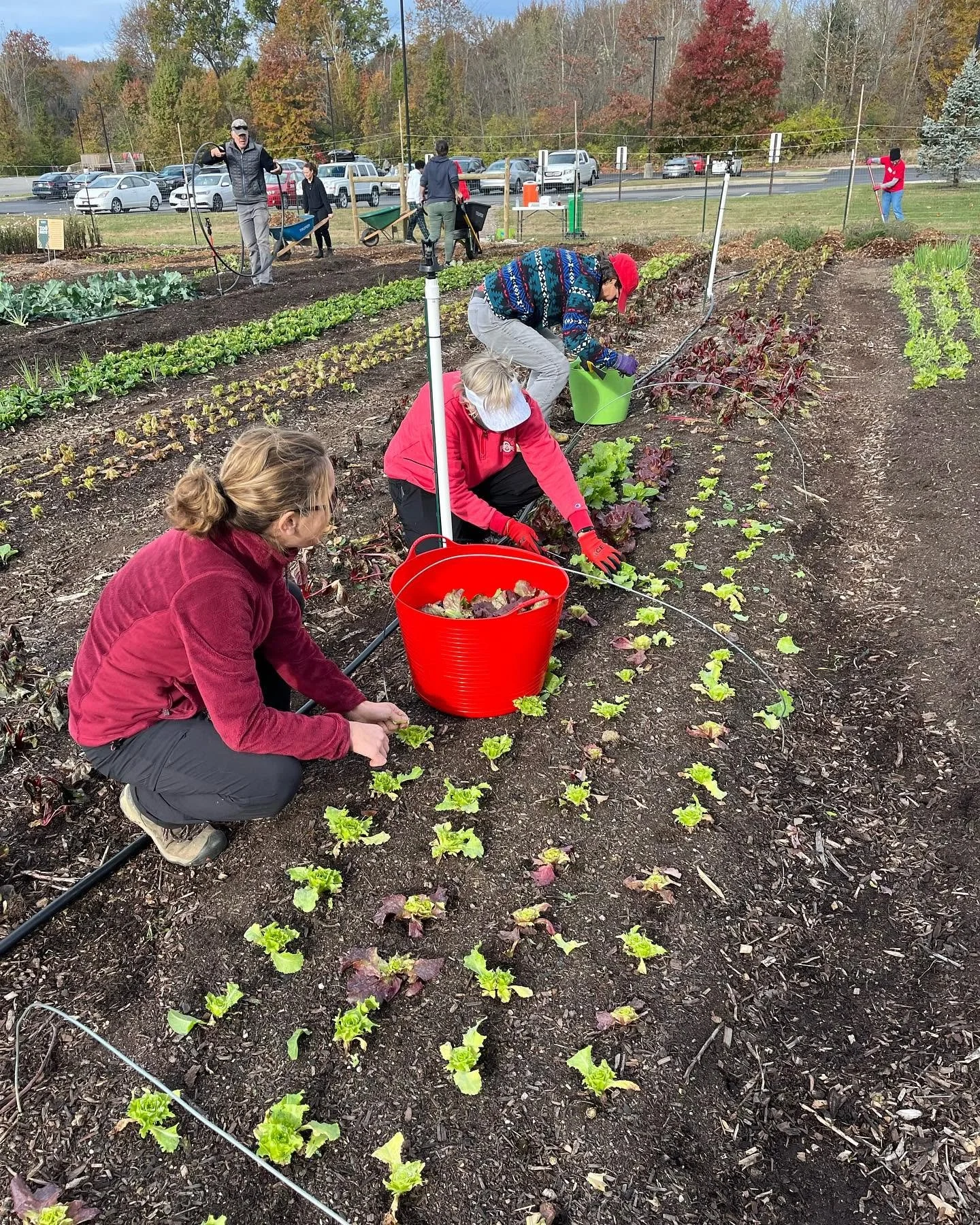
Distressed, as so many people were, by the pandemic’s economic impact on our surrounding community, we planted three 25-foot garden rows. That summer, we donated 750 pounds of produce to the two closest food pantries.
Our work did not yet have a name, a budget, a volunteer pool, or paid staff. It simply had an ache for two things, the same two things that guide us now: a desire to feed people healthy food when they need it, and a desire to bring people into relationships.
In the meantime, my ordination process continued smoothly. I assumed I was preparing for parish ministry. Back then, I believed there was a typical trajectory for a priest moving through the ordination process—and it did not include learning how to take a church garden and turn it into a 501(c)(3) nonprofit farm with acres of growing space.
We never planned for The Garden for All to become what it is now—a multi-acre farm that donates tens of thousands of pounds of produce to food pantries and engages hundreds of volunteers. It began as three rows of vegetables during a pandemic.
But as the years went on and the work continued, so did the questions.
What was this thing becoming? To whom was it important? And how did it fit with my developing priestly vocation?
Seminary Didn't Give Me a Map
When The Garden was still a garden and not yet a farm, I considered residential seminary. From the beginning, though, I was drawn to the practical components of Bexley Seabury’s offerings that coexisted with academic and theological formation.
Even still, my husband and I did not decide that I would attend Bexley Seabury Seminary simply so we could remain in Central Ohio and expand the nonprofit. In fact, the opposite would be more accurate: the nonprofit grew because Bexley Seabury, and all that it offered, was the right choice for our family.
Certainly, staying local afforded us the proximity and flexibility to build the organizational structure from the ground up. We did everything: hanging posters in local coffee shops, cold-calling churches for volunteer help, and weighing produce on our kitchen scale.
At the same time, the curriculum at Bexley Seabury supplemented the lessons we were learning on the ground.
In the course God and Mammon, for example, I examined my personal theology of money alongside the practical realities of fundraising, budgeting, and resource allocation. That learning had an immediate practical application: We were trying to build an organization while I was taking the course. Leading Nonprofits in the 21st Century gave me a framework for thinking about mission clarity, visionary leadership, community engagement, and organizational sustainability.
But it wasn’t just the curriculum.
The entire seminary experience provided the container for the “becoming” of whatever God was forming me to be at graduation and beyond.
Fellow students were preparing for parish ministry, chaplaincy, service within Indigenous communities, and places as yet to be determined. There was an openness to the movement of God that we honored. Across those three years, we challenged one another to look for God in new ways and in new places.
I found a culture of truth-telling and accountability that echoed what I had experienced in my corporate life. We developed a rhythm of prayer, contemplation, and theological examination that allowed us to become leaders of Christian ministry in the world, in whatever form God was calling us.
I had entered Bexley Seabury expecting my theological education to prepare me for one manner of ordained ministry. Instead, the work of becoming a priest in the context of Bexley Seabury was affecting my work as a full participant in my local community. And the work of becoming a community leader was affecting my development as a priest.
Public speaking, fundraising for the nonprofit, and building our community of volunteers overlapped with preaching, annual stewardship, and pastoring at the congregational level. Once I was ordained and serving a church full-time, even more overlap appeared as parishioners wanted to become involved in the work of The Garden for All.
As time went on, more questions arose about identity, responsibility, and vocation.
When was I serving in my role as a priest, and when was I the president of a nonprofit? When was I simply a person trying to get vegetables from a field to a food pantry?
Learning to Live the Questions
Years of discernment, spiritual direction, academic study, thought, and prayer have brought me here: There is no single answer to those questions, not one that is neatly definable, anyway.
We are many things across the course of our lifetimes, and the only place we really ever are is here. Being present to God in this moment is how we might encounter God more fully.
Theological formation did not give me one single definition of vocation. The offering of Bexley Seabury and where it met me on my journey strengthened both my practices for faithfully approaching the questions and my faith that God was in the midst of them.
It taught me to listen more carefully, to recognize the gifts of other people, to pay attention to the health of the systems I was helping to lead, and to become open to the possibilities of the Holy Spirit.
Was my theological education preparing me to lead a parish? Yes.
Was it preparing me to lead in the community outside the church? Also yes.
Was it preparing me for something that I haven’t yet anticipated? Probably.
Above all, it was preparing me to stay present and focused when answers were not always obvious, and to trust that God would reveal what I needed to know in God’s time.
My discernment has not yet revealed one final version of what my priesthood will look like. I’m not sure at what point I will be able to neatly define it. The Garden for All continues to grow and change, and so do I. Currently, we are considering what it would mean to purchase 25 acres of land, give our farm a permanent home, and provide hundreds of thousands of pounds of organic produce to our communities.
To Form Is Not to Finish
For a while, I had some difficult feelings because I didn’t attend seminary at my first opportunity. Time and perspective have allowed me to see that the years away were not empty or wasted—not even a little.
They were necessary.
They formed me as a leader, a listener, and a strategic thinker. I learned to identify health—in organizations, in other people, and in myself. They gave me tools I now bring to my service on the Bexley Seabury Board, where God has called me to participate in the seminary’s work in a new way: helping guide the strategic direction of current and emerging theological education programs, including those serving people discerning the diaconate, church planting, and Indigenous theology.
Those years away from formal discernment for ordination made me ready to be transformed by what Bexley Seabury had to offer.
And just as my formation didn’t begin when I entered seminary, it didn’t stop when I left.
That’s simply not how God speaks, and not how the Spirit moves. We are all being formed all along, if we let it be so. There is always more formation to be done, always another step forward to take.
To form is not to finish.
These are the truths I wish I had known when I was younger and watched the road map leave my hand and fly away in the wind. I wish I had known that formation was happening regardless of where I was, and that vocations take shape even when we can’t see it happening.
I would not tell people who are considering theological education that it will give them a clear pathway for the rest of their life in ministry.
It may.
But the map may also disappear, and suddenly the road may bend sharply to the left, down a winding path toward a place never imagined.
More important than knowing the destination is bringing ourselves fully to each moment of formation: participating in the journey, learning what we can, revising when needed, listening for the Spirit, taking the best next step, trusting that God wastes nothing, and believing that our current position may be more holy than we know.