

When Pamela Archbold speaks about the Deacons Formation Collaborative at Bexley Seabury Seminary, one word comes up repeatedly: integration.
For Pam, formation was never something separate from the life she was already living. It unfolded within it.
A hospice nurse by profession and now a deacon serving at St. Luke’s Episcopal Church in Park City, Utah, Pam entered the DFC after years of sensing a growing call toward deeper ministry. The idea of the diaconate first emerged through conversations with a trusted mentor who recognized gifts for pastoral care, listening, and service that Pam herself had not yet fully named.
Like many called to the diaconate, however, Pam found that traditional pathways to formation did not easily fit the realities of her life. She was already deeply rooted in vocation, community, work, and family responsibilities. Stepping away from those commitments for a conventional residential program simply was not possible.
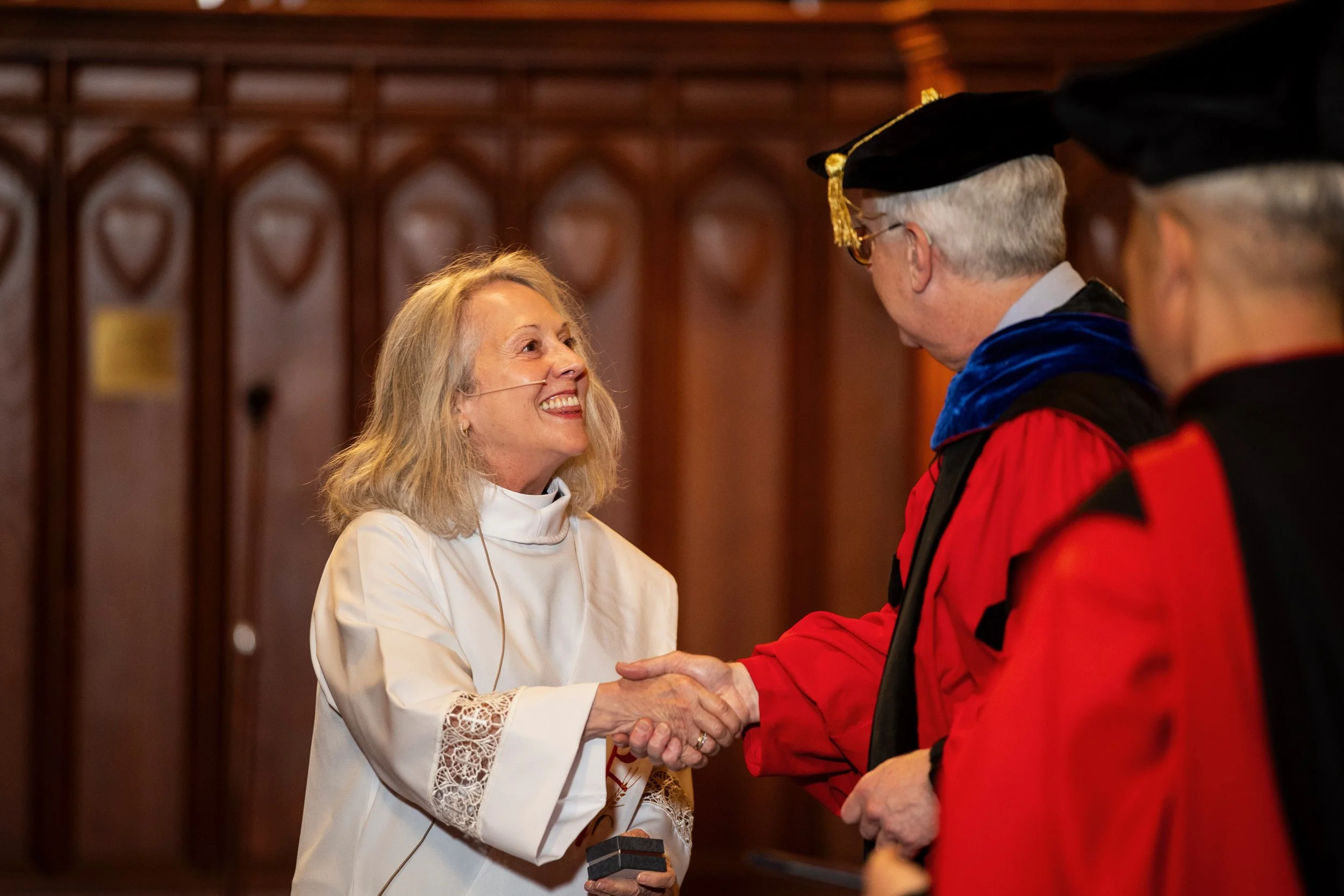
Pam Archbold, Diocese of Utah: “My work, my family, and my ministry weren’t obstacles to formation. They became part of it.”
What drew her to Bexley Seabury’s Deacons Formation Collaborative was precisely the opposite approach.
“The old model often asked people to step away from their lives in order to prepare for ministry,” she reflected. “The DFC is built around the reality that many people are already living deeply rooted lives of service and vocation.”
Rather than treating work, family life, and community engagement as obstacles to formation, the DFC invites students to understand those experiences as part of formation itself.
For Pam, that integration became one of the most transformative aspects of the program. Her ongoing ministry among the elderly, the dying, and families navigating grief was not placed on hold while she studied theology. Instead, her learning and ministry continually informed one another.
Today, Pam’s ministry extends beyond parish worship into pastoral care, chaplaincy, and community collaboration. In addition to serving at St. Luke’s, she participates in local interfaith work and supports aging and vulnerable populations through her background in hospice care and hospital chaplaincy.
The mentor-centered structure of the DFC also proved deeply formative. Pam speaks with gratitude about the mentors and cohort members who accompanied her through the process, offering both theological guidance and spiritual encouragement.
And although the DFC is primarily online and geographically dispersed, Pam pushes back gently against assumptions that digital formation cannot foster genuine community.
“It’s different,” she acknowledged, “but the relationships are real.”
That reality became especially tangible during Bexley Seabury’s 2026 Commencement and Holy Eucharist, where Pam joined fellow members of the first graduating DFC cohort in person for the first time after years of learning alongside one another online.
For Pam, the moment carried significance not only as a personal achievement, but as a sign of something larger unfolding within the Church.
She hopes the growing visibility of deacons will help more people understand the unique vocation of the diaconate — a ministry rooted not in status or hierarchy, but in connection, service, and helping the Church remain attentive to the needs of the world around it.
Looking ahead, Pam is excited to continue deepening her ministry in Utah while remaining connected to the wider network of relationships formed through the DFC.
“The support doesn’t end at graduation,” she said. “That sense of collaboration and community continues.”
As one of the first graduates of the Deacons Formation Collaborative, Pam’s story reflects a central vision behind the program itself: that formation for ministry can happen not apart from ordinary life, but through it.